
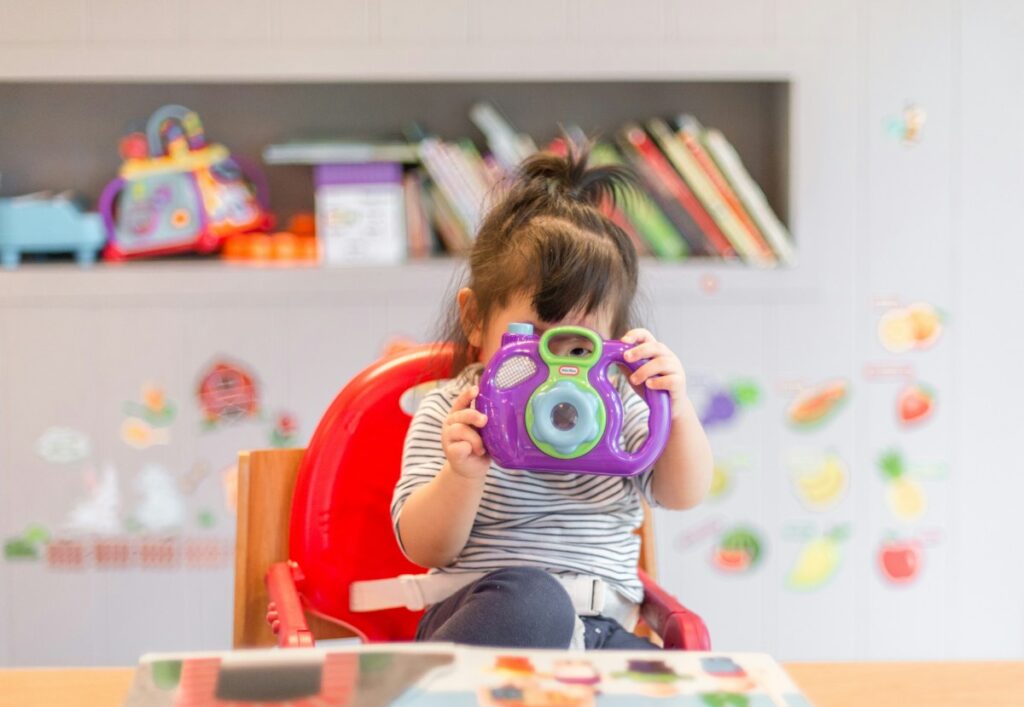
A communication-rich space gives children reasons and opportunities to interact without making access depend on perfect speech. It includes enjoyable materials, responsive partners, and available communication tools. The most expensive toys are not necessarily the ones that invite the best exchanges.
Where to start
Choose a few interests and leave room to move. Put AAC within reach and include words for actions, comments, refusal, and help. Take turns following the child’s ideas instead of directing every step or asking repeated naming questions.
An everyday example
During a car game, an adult models fast, stop, and again while moving a car. The child pushes a vehicle towards the adult, who treats that as an invitation. The interaction continues even if no spoken label appears.
What to review
Watch for shared enjoyment and spontaneous participation. If materials become distracting or the child needs solitude, simplify the space and respect that preference. Discuss access barriers with the child’s team so communication opportunities are possible without unnecessary physical or language demands.
Keep communication available throughout the day
A communication method needs responsive partners as well as suitable materials. Accept gestures, sounds, pictures, writing, and speech rather than selecting one acceptable channel for every situation. Give the child time to respond and avoid guessing with certainty when a message is unclear. Review access and vocabulary with a speech-language pathologist, especially if movement, vision, or language differences create barriers. Communication includes comments, feelings, disagreement, and relationships, not only requesting objects. Carry useful tools between settings and keep a practical backup for devices.
Further reading
The practical examples above are educational suggestions. The following sources provide broader professional context; they do not individually validate every suggested activity.
For individual health, communication, or safety concerns, consult the appropriate qualified professional. Stock photographs are representative and do not identify a diagnosis.