
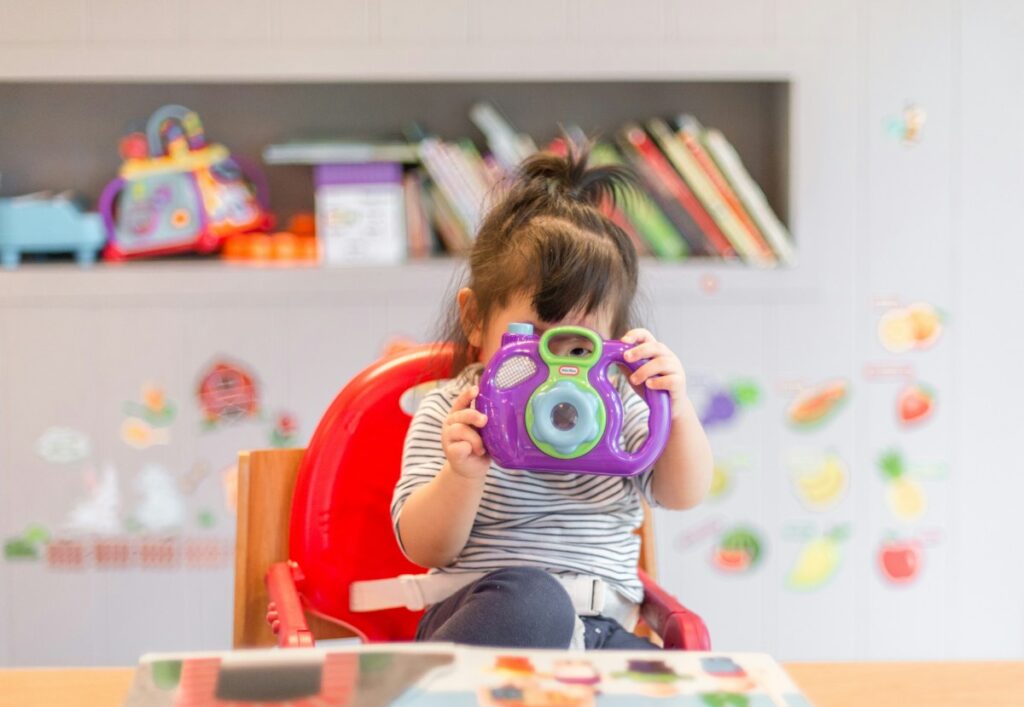
Echolalia is the repetition of words or phrases heard previously. A repeated phrase may carry meaning, support participation, or serve another purpose, and its function can differ across moments. Adults benefit from investigating context before deciding what a child is communicating.
Where to start
Write down the phrase and what happened immediately before and after it. Notice tone, body language, and the setting. Respond to a likely message while remaining open to correction, and consult a speech-language pathologist about individual language support.
An everyday example
A child says time to go during a noisy activity. Rather than asking them to repeat a different sentence, the adult offers a quieter space and a way to say leave or break. Further observations can help clarify whether that interpretation fits.
What to review
Avoid assuming every repeated phrase has the same meaning or that one language framework explains all children. The practical goal is better understanding and more accessible communication. Support a range of messages without making the removal of repetition the central objective.
Keep communication available throughout the day
A communication method needs responsive partners as well as suitable materials. Accept gestures, sounds, pictures, writing, and speech rather than selecting one acceptable channel for every situation. Give the child time to respond and avoid guessing with certainty when a message is unclear. Review access and vocabulary with a speech-language pathologist, especially if movement, vision, or language differences create barriers. Communication includes comments, feelings, disagreement, and relationships, not only requesting objects. Carry useful tools between settings and keep a practical backup for devices.
Further reading
The practical examples above are educational suggestions. The following sources provide broader professional context; they do not individually validate every suggested activity.
For individual health, communication, or safety concerns, consult the appropriate qualified professional. Stock photographs are representative and do not identify a diagnosis.